
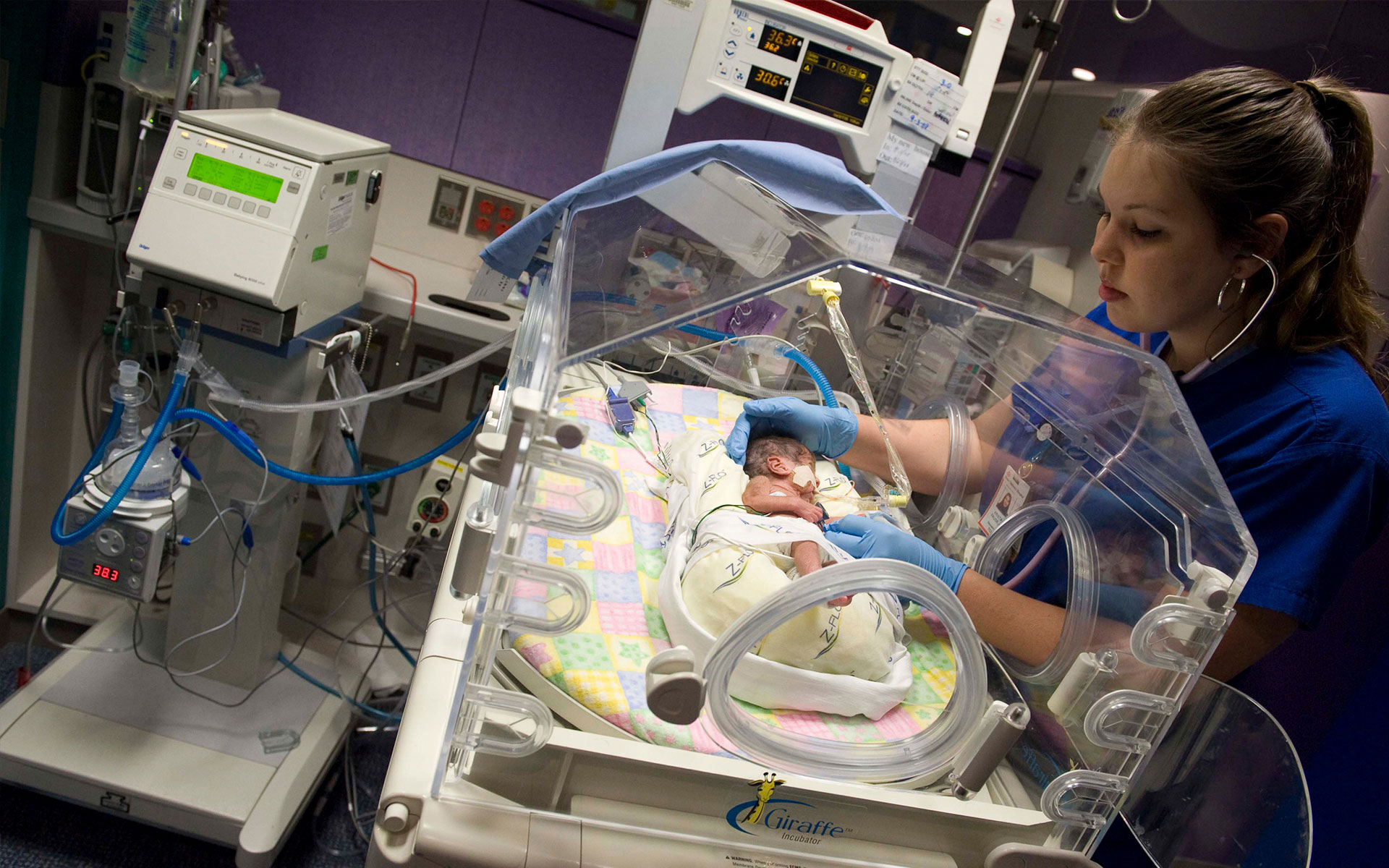
This was the fourth hospital our family had gone to in two weeks. The first was because my dad had to get cancer treatments. The second was my post-surgery check-up. The third and fourth were for my brother and his wife’s daughters, twins that were born about three months early. They had been rushed into the ER and, a few days later, transported to the NICU (neonatal intensive care unit). I still remember the two clear fish-tank-like boxes that held my nieces, who at the time were no bigger than a jar of peanut butter. Little oval windows on the side of their boxes let us stick our hands in to touch the babies; that is, if we could get around the plethora of machines surrounding their “cribs.” We would often do “hand hugs,” where we would stick our finger in, and my nieces’ hand would barely wrap around the end of it. The tubes, wires, and mini piles of blankets that covered their tiny bodies—which were the only things keeping them alive—would make it difficult to catch a glimpse of their bruised skin. It was fairly easy to mistake their fingers, which had the thickness of spaghetti, for their pebble-sized toes.
One of the many machines would start frantically beeping every few minutes. At first, my heart would escalate every time I heard it go off. Panic would settle in as I feared something might be going wrong. After a few weeks, it faded into white noise, and I learned to only panic when the nurses looked worried. In a few more days, one of those boxes would be empty, and the two days I had to meet Paige would be the only memories of her I’d ever have. Her sister Brooke, on the other hand, would slowly continue to recover as more wires, blankets, and machines would be removed from her.

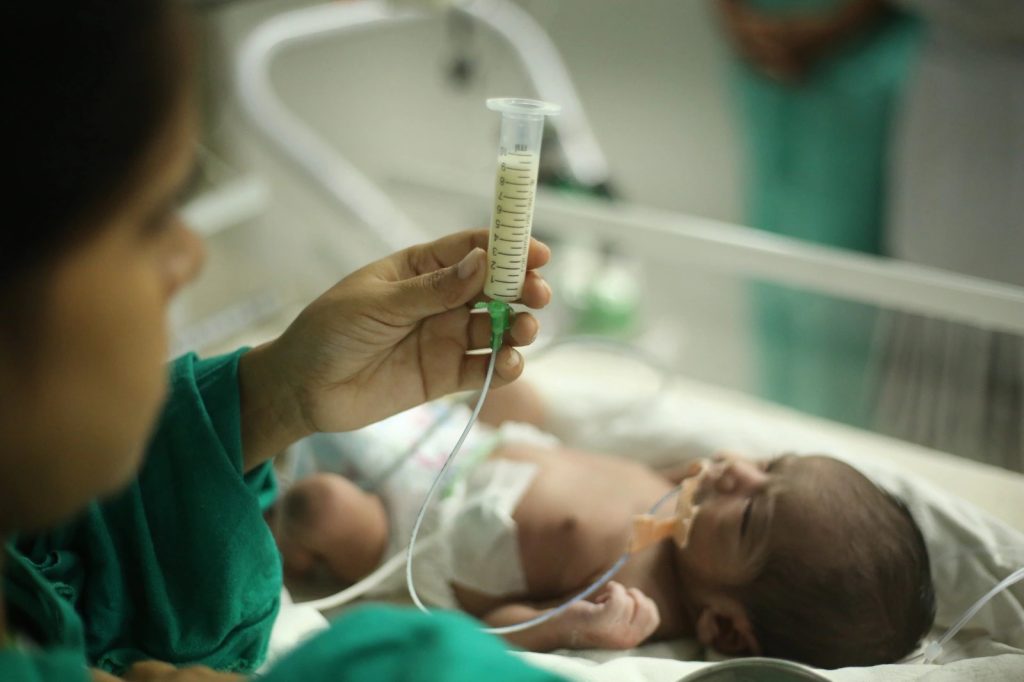
After spending 122 days confined in the walls of the NICU, she would finally be able to come home with only a feeding tube. No more staying in the hospital overnight, no more living off of crustables from the family lounge, no more passing by the empty room where Paige once stayed, and no more wondering when this nightmare would all be over. However, now Linus and Stacey faced a different problem: Brooke would not finish drinking her milk bottles. While this was expected, and the rest would just be given to her via her feeding tube, this persisted for a few months. While she originally wasn’t finishing her bottle because she just got too tired, now, she doesn’t finish her bottle because she doesn’t want to use the bottle. For the parents whose child has already gone through so much at such a young age, this has been quite concerning. She can’t feed through a tube her entire life, so how do they help her transition to oral feeding sooner rather than later?
This problem isn’t unique to my siblings. While premature births have been on the decline, about 10% of all infants are born prematurely. Not only that, but most preemies (preterm infants) struggle to transition from tube feeding to oral feeding. As a matter of fact, about 42% of pre-term infants end up with a feeding problem (typically more than one feeding problem) (Ranjith et al. 1). In comparison, only about 1% of all term infants end up with a feeding problem (Ranjith et al. 1). Likewise, preemies who were born less than 28 weeks from conception have a slightly higher chance of feeding problems (46%) (Ranjith et al. 1). What causes such a high percentage of these feeding problems? In a study that focused on the factors affecting the feeding ability of Indonesian preterm infants, researchers noted that self-regulation, postural tone, level of morbidity, and behavioral state were the main factors that influenced preemies’ oral feeding abilities. Self-regulation refers to the way an infant’s body systems respond to both external and internal stimuli. Preemies who can’t self-regulate tend to have a 1.8 times greater risk of being unable to orally feed (Wahyuni et al. 239-241). The next factor is their behavioral state, which influences an infant’s ability to interact or take interest in certain activities, such as feeding. Preterm infants who are not alert have a 1.4 times greater risk of being unable to feed orally (Wahyuni et al. 239-241). Similarly, preterm “infants with inadequate postural tone [the muscles that help in balance and posture] had twice the risk of experiencing the inability to feed orally” (Wahyuni et al. 239-241). Meanwhile, Preemies with high morbidity—the level of illnesses and medical conditions someone has—are 1.6 times more likely to experience an inability to feed orally when compared to infants with low morbidity (Wahyuni et al. 239-241).
Treating feeding problems early on can differ greatly from infant to infant, as not every infant has the same problems. While my nieces were in the NICU, my family was quite social with the other parents who also had a child stuck there. While they didn’t discuss their diagnoses due to the heaviness of each situation—and their nurses wouldn’t either due to legal reasons—we still got glimpses as to what each situation was like. Some parents who had been there for a month or two would complain about how their child wouldn’t take a bottle, the last step before they could finally go home. Our family silently chuckled when we heard parents complain about how two weeks in the NICU had been an eternity for them. We avoided telling them that we had already been there for two months and probably still had two more to go. One child had only been in the NICU for 4 days; all of us were utterly confused and wondered why they were even there in the first place. Two kids got there before Brooke and Paige and were still there when Brooke left. Some babies that left were a bit bigger than a breakfast burrito. No two preemies are alike, so there are many assessments that need to be performed to determine what feeding problems, or category of feeding problems, the infant has. These assessments give the doctors and nurses a better guide in determining what procedures and actions need to be taken to help treat and/or prevent the infant’s feeding problems (Ranjith et al. 8-10).
Since preemies vary so much in feeding problems, what can generally be done to help transition from tube to oral feeding? One proposed method is through Kangaroo care. Kangaroo care is where premature infants are placed on the breast of their mother—or sometimes father—giving more skin-to-skin contact between the child and parent. While this may appear unrelated to oral feeding, it actually speeds up the transition time from an average of 10 days to an average of 4.5 days (Ciochetto et al. 5). In 2009, various nurses, doctors, clinical instructors, research scientists, and university professors, all specializing in infant development and/or multidisciplinary brain research, conducted a study that focused on the mother-infant relationship. They found that when mothers had high amounts of both physical and eye contact during the neonatal period, their infants were easier to feed. Meanwhile, mothers who had less physical and eye contact, especially while feeding, resulted in more difficult eaters (Silberstein et al. 517-518).
Another, more recently proposed method is called “cue-based feeding.” Many NICUs follow a “volume-driven” feeding process where the goal is to make sure that the infant gets a certain volume of food at regular intervals. Many studies have shown that volume-driven feeding makes it harder for the infant to request food. This often leads to the infant declining their food, as it has been something they are forced to take instead of something they asked for. Cue-based feeding, on the other hand, does not focus on trying to get as much volume as possible, but rather focuses on letting the infant communicate when they are hungry and want food (Shaker 404-405). If an infant is hungry, then they will probably take a bottle willingly. If an infant doesn’t want a bottle, then they are trying to communicate that they aren’t hungry (Brackett).
Trying to eat when full isn’t exactly a pleasant feeling. While serving my mission in North Carolina, it was considered rude not to finish the mountains of food people offered us. So, we would be forced to stuff ourselves and never say “no” when they brought out an even larger mountain of food. For me, eating while full is like trying to zip up a suitcase that is at two times its regular capacity, only this suitcase is my stomach. On the other hand, hunger is a great motivating factor to eat. I also know this very well from personal experience. When I’m hungry, it becomes harder to focus on things that aren’t food. I slowly become more agitated until I’m about ready to steal a fry—or sometimes an entire burger—right off of someone’s plate. My willpower is strong enough that I don’t ever actually do this. Most of the time. I have likewise fasted on many occasions. After fasting and going without two meals, dinner that night—whether it was an elegant 5-star Parmesan lobster ravioli made by Gordon Ramsey himself or a frozen hot pocket that still manages to burn my mouth—was always the most delicious meal I’d ever had.
Infants are pretty similar. After all, they are human and each of us were infants at some point. Of course, an infant isn’t going to steal someone’s Chipotle burrito, but they have the same enjoyment of eating with an empty stomach as we do. They also have the same disgust as us when we try to stuff ourselves. The key is trying to understand their “I’m hungry” cues. These might be sucking on their fingers, repeatedly opening and closing their mouth, looking around for their next meal, or they might even start crying obnoxiously (Morag, 2). The important thing is that the infant is saying they are hungry and that they actually WANT to eat. The biggest feeding problem that parents tend to have after and while waiting to be discharged from the NICU is picky eaters. However, even picky eaters get hungry and will eat just about anything to satisfy their hunger. This style of cue-based feeding has been tested and studied in various NICUs, and the results have shown that cue-based feeding leads to complete oral feeding much quicker than traditional volume-driven feeding. However, implementing cue-based feeding in NICUs can be rather difficult. Many nurses in the NICU want to try and get the most food into the preemie. More often than not, the “better” nurses are those who can get more food in. Even in NICUs that don’t have this “better nurse” mentality still want the babies to make it home. If the preemie meets the volume requirement sooner, then they could go home sooner (Shaker 404-406). This creates pressure to try to feed the infant even when the infant has already tried to communicate that they are done feeding. The focus for feeding is on quantity, not quality. Preventing and fixing this problem would involve a focus on changing the culture of NICUs and not just the procedures that they follow (Shaker 404-406).
While these methods are helpful, there are plenty of infants–such as my niece–who are out of the NICU and still have feeding problems. Likewise, the parents have little influence in how a NICU operates, and not every NICU does kangaroo care or cue-based feeding. So, what could parents do to help their pre-term infant overcome feeding problems when they are already out of the NICU? Unfortunately, there are significantly fewer studies that focus on this question. One potential option that has recently been explored is implementing cue-based feeding in the home, that is, if it wasn’t already implemented in the NICU. Dr. John Baker, a pediatric gastroenterologist, says that it is best to “look at the baby” and let them communicate when they want to be fed (Brackett). If they want to be fed, feed them. If they don’t, then don’t. This implementation of at-home cue-based feeding has led to many infants completing a full transition to oral feeding (Brackett). Of course, changing–or in this case, ignoring–the already established feeding schedule should only be done under the authorization of a doctor.
The study that focused on the mother-infant relationship notes that when mothers simply looked at their infant more while both feeding and playing with them, their infant became easier to feed (Silberstein et al. 517-518). While we might find long and silent eye contact rather awkward when eating with other people, when a mother and infant make eye contact, they form a stronger bond. This helps the infant become more trusting of their mother and thus become more accepting of the bottle. Not only is the bond and trust increased, but the more the mother looks at the infant, the more she recognizes and picks up on the infant’s feeding cues (Silberstein et al. 517-518). Likewise, when mothers touched their infant more, they would eat more. This is because a mother’s touch is oftentimes more gentle and loving than the caregivers who took care of them in the NICU. This “mother’s touch” helps the infant relax and feel more secure (Silberstein et al. 517-518).
It appears that there is still hope for Brooke. While we still worry about her eating, deep down, we know she will one day no longer need the feeding tube. She is strong. Only once have I ever seen Brooke’s face without the orange tube and band-aid colored tape that holds the tube in place. She’s quite squirmish, and she accidentally pulls it out every now and then. She’s done that many times before, but only once did she ever do it in front of me, almost as if she was trying to tell me that she’s ready to live without the tube. However, she doesn’t quite realize that means she’ll need to feed without the tube as well.
Works Cited
Brackett, Krisi. “Ideas for Transitioning off of a Feeding Tube – Pediatric Feeding News.” Pediatric Feeding News, 29 May 2017, pediatricfeedingnews.com/ideas-for-transitioning-off-of-a-feeding-tube/. Accessed 1 Nov. 2025.
Ciochetto, Carla Ribeiro et al. “Effects of Kangaroo Care on the Development of Oral Skills and Achievement of Exclusive Oral Feeding in Preterm Infants.” CoDAS vol. 35, no. 5, . 4 Aug. 2023, doi:10.1590/2317-1782/20232022070
Kamity, Ranjith et al. “Feeding Problems and Long-Term Outcomes in Preterm Infants-A Systematic Approach to Evaluation and Management.” Children (Basel, Switzerland) vol. 8, no. 12, . 8 Dec. 2021, doi:10.3390/children8121158
Morag, Iris, et al. “Transition from Nasogastric Tube to Oral Feeding: The Role of Parental Guided Responsive Feeding.” Frontiers in Pediatrics, vol. 7, no. 190, 9 May 2019, https://doi.org/10.3389/fped.2019.00190.
Park, Jinhee, et al. “Symptoms of Feeding Problems in Preterm-Born Children at 6 Months to 7 Years Old.” Journal of Pediatric Gastroenterology & Nutrition, vol. 68, no. 3, Mar. 2019, pp. 416–421, https://doi.org/10.1097/mpg.0000000000002229. Accessed 4 Nov. 2025.
Shaker, Catherine S. “Cue-Based Feeding in the NICU: Using the Infant’s Communication as a Guide.” Neonatal Network, vol. 32, no. 6, 2013, pp. 404–408, https://doi.org/10.1891/0730-0832.32.6.404.
Silberstein, Dalia, et al. “The Mother-Infant Feeding Relationship across the First Year and the Development of Feeding Difficulties in Low-Risk Premature Infants.” Infancy, vol. 14, no. 5, 1 Sept. 2009, pp. 501–525, https://doi.org/10.1080/15250000903144173. Accessed 23 Oct. 2025.
Wahyuni, Luh Karunia et al. “Factors Affecting Oral Feeding Ability in Indonesian Preterm Infants.” Pediatric Reports vol. 14, no. 2, May 2022, pp.233-243. doi:10.3390/pediatric14020031