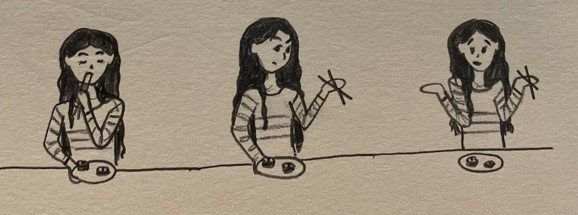
As the oldest, obviously I’m obligated to be the hero in my family, saving everyone else from whatever monster I may encounter.
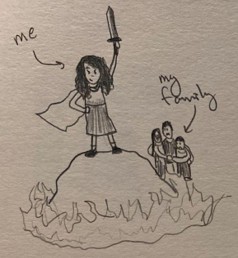
The monster, of course, was my three-year-old sister, whose sole purpose (at least to me) was to fill whatever role I needed in my variety of imaginary games. She played the part perfectly actually. When she wasn’t napping, she mostly screamed, ran around, occasionally scribbled on the walls, or threw all of her toys around the room. The goal of this particular Sunday morning, with half an hour before we all left for church, was to chase her down, a common occurrence. I
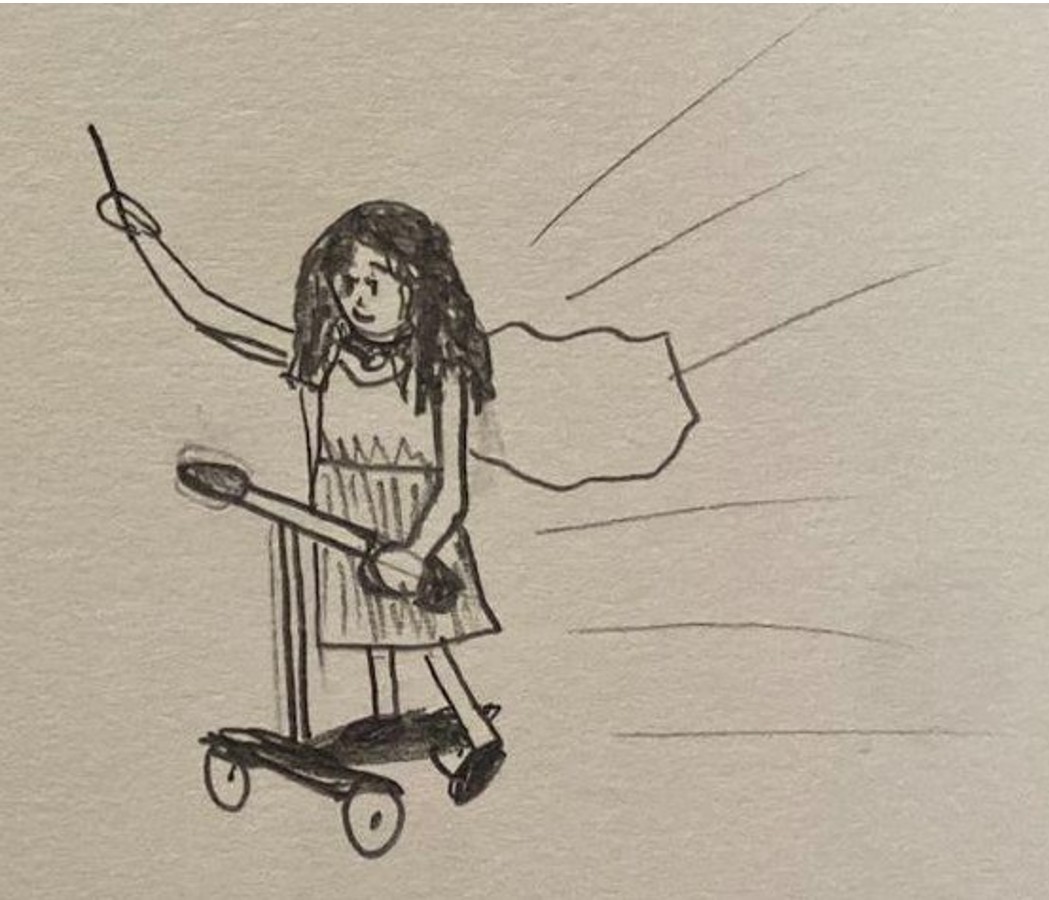
armed myself with a cape (blanket tied around my neck) and my forbidden weapon of choice; the chopstick my parents didn’t want me to find hidden in the back of a drawer.
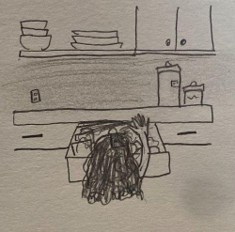
It felt like some magical curse, that the second I touched it, someone was bound to take it away from me, or give me a big, long, boring, grown-up talk about being careful. That day, my mom, attempting to get my younger brother dressed and her own makeup done, opted for the rehearsed “Elizabeth please be careful” speech. It’s a good thing that as a trained monster hunter, I knew Mom and Dad didn’t know what they were talking about. It’s not like they’d ever been right about those things before.
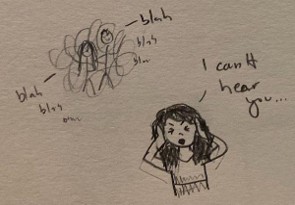
The problem my young seven-year-old mind wasn’t able to comprehend, was that in fact, my mom didn’t just warn me because it’s listed in the parental job description. She was genuinely trying to prevent inevitable mistakes and pains and disasters. Note the use of the word inevitable. Just because my mom, or my dad, or my grandma, or my teacher, or anyone else for that matter, tried to dissuade my innocence yet dangerous endeavors, didn’t mean I was going to listen.
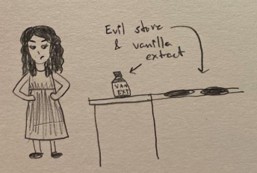
As humans, and especially as young children, we have an innate need to test things out for the sake of our own curiosity. A child’s thought process is pretty simple. Vanilla extract smells yummy, so even though Dad says not to, of course I’m going to take a big sip.
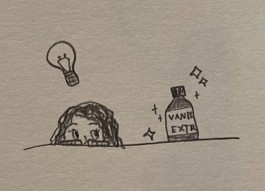
The stove top looks so intriguing when it’s lit up red, so even though I’ve been told not to touch, what’s actually gonna happen if I slap my hand over it?
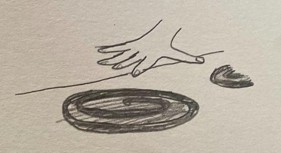
I just wasn’t going to listen until I had gotten burned, the hot red sting lingering on my hand as a lesson, burning into my brain (and also my hand).
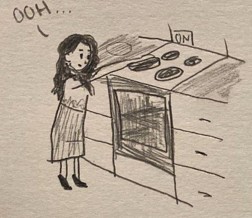
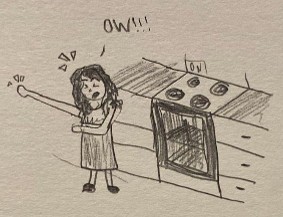
What I failed to grasp so often in my youth was looking at the bigger picture of what I was experiencing. The lesson isn’t just to not touch the hot stove, but to listen to someone who knows better, NOT TO TOUCH THE HOT STOVE. Don’t drink vanilla extract when Dad warns you that, as an adult who knows you better than you probably know yourself at nine years old, he doesn’t think you’ll like it. Scratch that, not that you won’t just not like it, but that it is the most deceivingly amazing smell for a cruel substance that has the most punishing taste.
And yet I couldn’t seem to recall all of the times I had been forewarned of perils only a seven-year-old would be stupid enough to face and continued through with my actions. Besides, I had a younger sister to catch, and that thought was pretty much all that preoccupied my young mind. So, I hopped on my sparkling Disney princess scooter, tightened my cape, and launched forward with my chopstick in hand like a guiding compass, leading me towards extricating my household from the monster.

I sped around the house, propelled by my siblings’ annoyed cries for help. I weaved around the large dining table, impressively avoiding the chairs my siblings and I had forgotten to put away after breakfast. I dashed through the kitchen, the hard tile cold each time I let my foot down to push myself. I was so close to catching her.

As I rounded a corner of my castle (otherwise known as the living room), my scooter caught on the wedge of an uneven floorboard. One of the wheels stuck on the floor, the rest of my momentum still in motion.
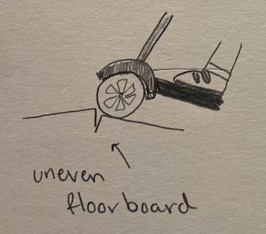
No amount of reflexes could save me. My body flung across the room off of my scooter, feet and arms flailing as though I could avoid colliding with the hard wooden floor.
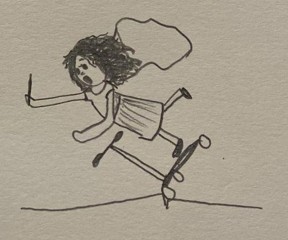
As I continued my harsh descent to the ground, my hand, with a tightened grip on the chopstick, set course to my face. DOOF. I slammed onto the floor.
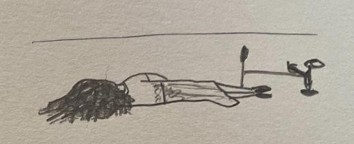
I would have been more upset by my bloody knees and sore elbows, if I hadn’t been met with a sharp and intense pain in what felt like the middle of my brain. Within seconds, I looked down at the floor, only to see a crimson red pool gathering on not only the cruel hardwood floor, but my new favorite church dress.
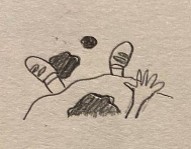
Tears fought in my eyes, attempting to add to the quickly growing pool in front of me. I screamed, because what else am I supposed to do? My parents rushed into the room, met with the horrific sight of their daughter and her scooter, both collapsed on the floor, a pool of blood and salty tears, and a chopstick up my nose. By some statistical miracle, I had managed to lodge the chopstick up my tiny nostril during my fall.
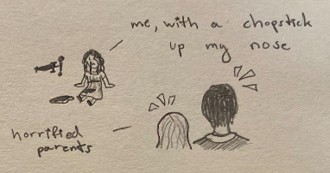
Having effectively ruined not only the monster game, but my family’s entire day, I was rushed off to the ER. After being met with numerous tests and lots of cold, foreign, metallic tools, by yet another miracle, the impact of the chopstick was not going to cause any permanent damage, as it had missed hitting my brain by about a few millimeters. Thankfully I would only be required to stay in the hospital for a few hours to have a fairly easy procedure done, and then would have maybe a few doctors’ checkups to ensure I was properly healing.
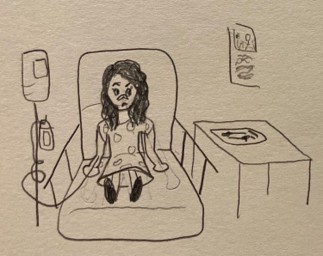
I think so often, we end up missing the bigger picture of things. I should have paid attention when my mom told me to stop running with chopsticks. My seven-year-old self couldn’t have known how much pain I would end up in, but my mom certainly knew it could only have ended up in trouble.
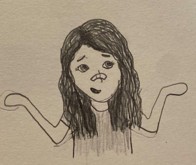
Parents, or any other mentors for that matter, aren’t there to stifle our fun and curiosity, or interfere with our monster games (something I clearly could do on my own). They are there to teach us. Of course, I still haven’t perfectly learned this lesson, but that day shaped my understanding of the concept.
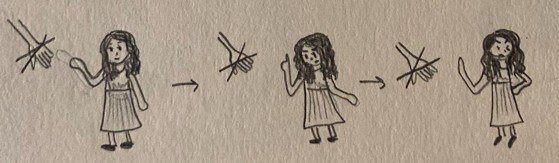
Now, as a twenty-year-old college student, I’ve become much more receptive to feedback and advice, as well as more discerning about why it’s given.
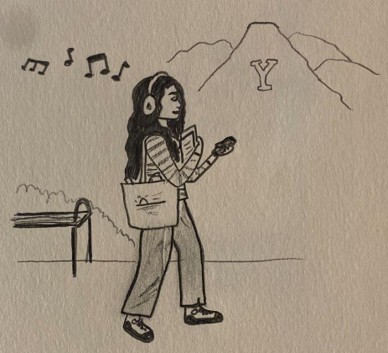
So when my teacher tells me I should start an assignment earlier than a day before it’s due, given the fact that they have more experience here, I should probably heed that advice.
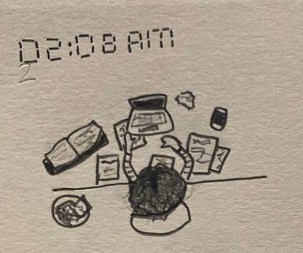
Even when meeting with TAs about certain exams, it would be in my best interest to listen to the little hints they give me. I won’t always understand the relevance of certain practice questions we go over in the moment, but when the test comes, I’ll be glad I listened to them.
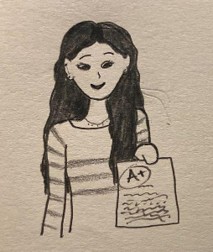
And from now on, when my parents tell me to be careful when using a sharp tool, I definitely will be.